The Virtue of Waiting: Why the Most Admired Collectors Treat Restraint as a Collecting Strategy
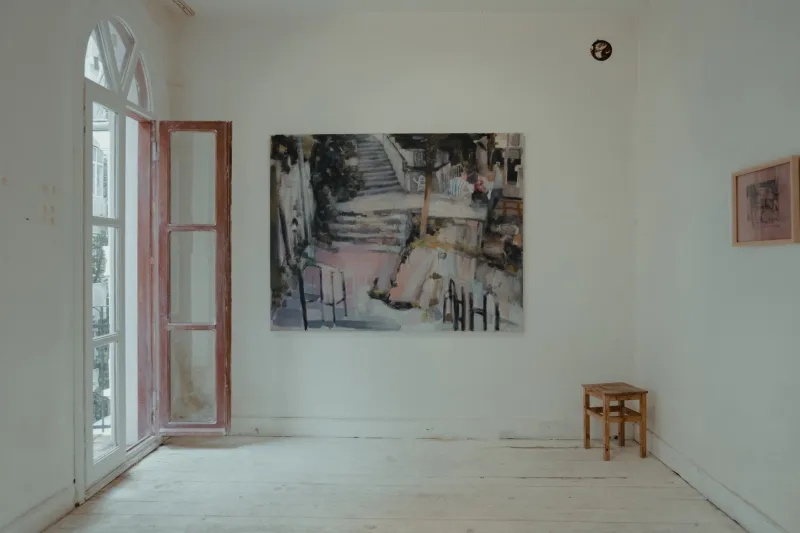
There is a particular kind of collector who arrives at an opening, moves through the room with practiced calm, and leaves without acquiring a single piece. To the uninitiated, this behavior appears to signal indifference. To those who understand how serious collections are actually built, it signals something else entirely: a cultivated capacity for restraint that is, paradoxically, one of the most powerful tools in the collector's arsenal.
American culture does not naturally incline toward waiting. The entire architecture of contemporary commerce is designed to compress the distance between desire and acquisition to something approaching zero. Art, in recent years, has not been immune to these pressures. The rise of online viewing rooms, rapid-fire Instagram reveals, and the social performance of acquisition has made impulsive buying not merely acceptable but, in certain circles, aspirational. The collector who claims a work the moment it becomes available is celebrated. The one who waits is sometimes pitied.
This framing deserves a serious challenge.
What Impulsive Collecting Actually Produces
The collections that tend to generate the most admiration — those that feel coherent, purposeful, and revelatory of a genuine sensibility — are almost never the product of rapid, reflexive acquisition. They are the product of a collector who has, over time, developed a clear point of view and the discipline to honor it even when something appealing falls outside its perimeter.
Impulsive collecting, by contrast, tends to produce what might generously be called an eclectic collection and what might more honestly be described as an accumulation — a group of individually interesting objects that have no meaningful conversation with one another. The collector has responded to quality in isolation but has not exercised the harder judgment of asking whether that quality belongs here, in this collection, alongside these particular works.
This is not a critique of enthusiasm. Enthusiasm is essential. But enthusiasm without discernment is simply appetite, and appetite alone does not build a collection worth inheriting.
The Waiting List as Relationship
Among the practical benefits of patience, perhaps none is more underappreciated than what the waiting list actually represents. When a collector places themselves on a waiting list for a sought-after artist's work — committing to the artist's practice before a specific piece has been produced — they are doing something far more significant than securing a future acquisition. They are entering into a relationship.
Galleries and artists notice who waits. They notice who acquires without urgency, who returns across multiple exhibitions, who asks thoughtful questions rather than simply asking about availability. The collector who demonstrates patience is communicating something important: that their interest is genuine rather than speculative, that they are building something rather than simply buying something.
Over time, this reputation opens doors that no amount of money can purchase. Studio visits are extended. Works that never reach the public market are offered quietly. The collector becomes a participant in an artist's trajectory rather than a consumer of its outputs. These are not trivial distinctions. They are the difference between a collection and a chronicle.
Patience Builds the Eye
There is a less discussed but equally important dimension to waiting: the time spent in anticipation is rarely wasted. The collector who has placed themselves on a list for a work that may not arrive for eighteen months has, in the interim, an extraordinary opportunity. They can study the artist's existing body of work with new intensity. They can research the artist's influences, read their interviews, visit institutions that hold related works, and develop a genuinely sophisticated understanding of what they are about to acquire.
By the time the work arrives, the collector does not merely own it — they understand it. And the collector who understands a work is in an entirely different relationship with it than the one who simply possesses it.
This is the quiet education that impulsive acquisition forecloses. The piece purchased in a moment of excitement arrives as a stranger. The piece waited for arrives as a long-anticipated guest whose history and character are already known.
The Discipline of Saying No
Restrained collecting is, in large part, the discipline of refusal. It requires the collector to encounter something of genuine quality and elect not to acquire it — not because it is unworthy but because it is not right for this particular collection at this particular moment. This is among the most difficult skills to develop, and it is also among the most valuable.
The collectors whose names are spoken with the most respect in American art circles are, almost uniformly, those known for a coherent vision rather than an impressive volume. Their collections have a thesis. Every acquisition either advances that thesis or, in the most interesting cases, productively complicates it. Nothing is present simply because it was available or because the price was favorable or because the opening was attended and the work was charming under gallery lighting.
Developing the capacity to say no to good work in service of great work — and to say no to great work that is simply not yours — is a form of connoisseurship that takes years to cultivate. It cannot be rushed. That is, of course, rather the point.
The Collection That Waits to Be Seen
There is a final argument for patience that operates on an entirely different register. Collections built through restraint tend to age well, not merely in a financial sense but in a qualitative one. They retain the capacity to surprise their owners. Works acquired thoughtfully, after due consideration, continue to offer something — a new detail noticed, a connection to a later acquisition that was not yet visible at the time of purchase.
Collections assembled in haste tend toward a different fate. The excitement of acquisition fades, and what remains is the work itself, which must now justify its presence on the strength of its own merits rather than the thrill of the moment in which it was obtained.
Patience, in this sense, is not merely a strategy for building a better collection. It is a strategy for building a collection that continues to matter — to its owner, to the artists it represents, and to the broader culture that will eventually encounter it.