Reading the Room: What a Sommelier's Discipline Can Teach the Serious Art Collector
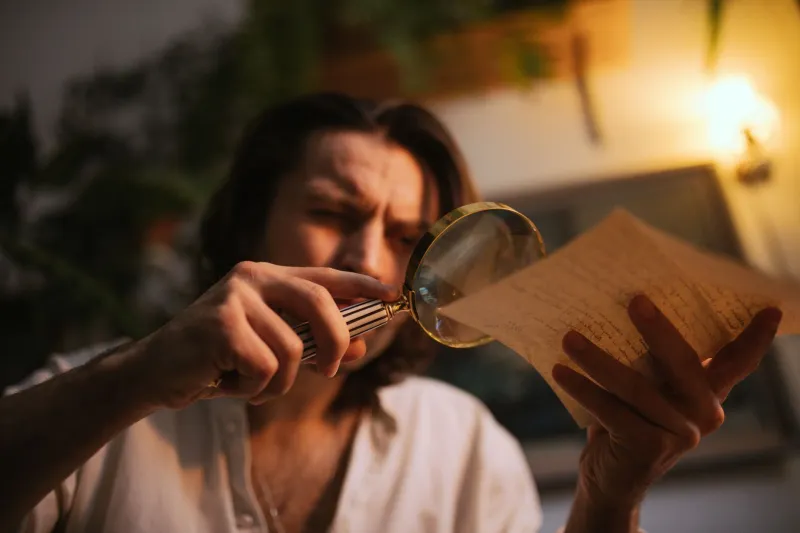
There is a moment, familiar to anyone who has sat across from a skilled sommelier, when the glass is raised not to the lips but to the light. Before a single drop is tasted, the professional is already working — reading color depth, assessing viscosity, cataloguing the first impressions that will inform everything that follows. The wine has not yet spoken, and yet the conversation has already begun.
For the collector standing before a contemporary work at an opening, at a studio visit, or in the quiet of a gallery's back room, the same principle applies. Seeing — truly seeing — is a discipline, not a reflex. And like the sommelier's palate, the collector's eye is something that must be developed, tested, and refined over time.
The First Impression Is Not the Final One
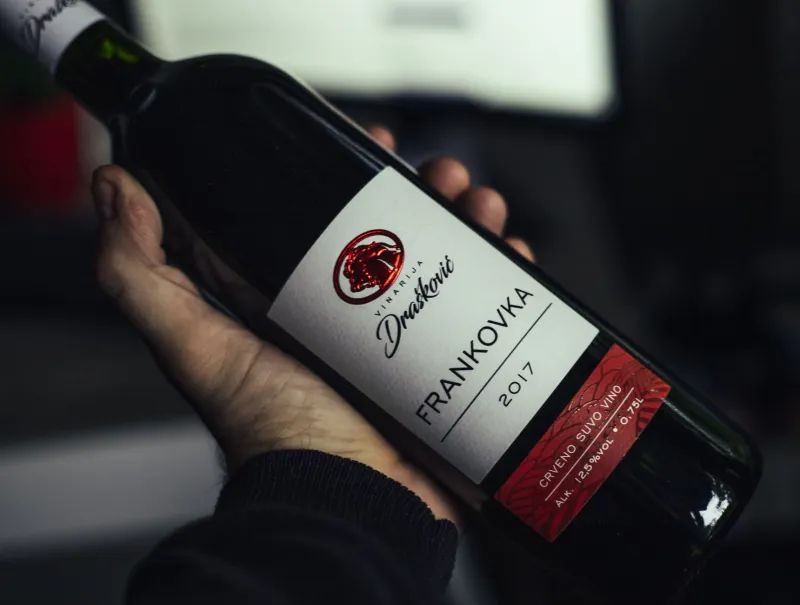
Amateur buyers tend to make decisions in the first thirty seconds. The color appeals, the scale works, the subject resonates. These are not irrelevant considerations, but they are the equivalent of choosing a wine because the label is attractive — a reasonable starting point that should never be a stopping point.
The trained collector, like the trained taster, learns to suspend that initial reaction long enough to ask a more rigorous set of questions. What is happening beneath the surface? How has the artist structured the composition, and does that structure reward sustained attention? Is the work resolving something, or is it deliberately unresolved — and if so, is that tension intentional or merely unfinished?
In wine terms, this is the difference between noting that a Burgundy is red and identifying the sous-bois, the iron, the dried cherry that emerge only after the wine has had time to open. The first impression is data. The deeper read is knowledge.
Building a Visual Vocabulary
Sommeliers speak a language that seems arcane to outsiders but is, at its core, simply a precise vocabulary for sensory experience. Words like grip, minerality, and tension are not affectations — they are tools that allow professionals to communicate nuanced observations with efficiency and accuracy.
The collector benefits enormously from developing an equivalent vocabulary for visual experience. Understanding the difference between impasto and glazing in paint application, between positive and negative space in composition, between a work that is optically complex and one that is merely busy — these distinctions allow a collector to articulate what they are perceiving rather than simply feeling it.
This vocabulary is not the province of academics alone. It is built through consistent, deliberate looking: visiting galleries regularly, reading artist statements critically, attending studio visits, and — perhaps most valuably — spending time with works that initially resist easy understanding. The wine that confounds you on the first sip often teaches you the most by the second glass.
The Technical Fingerprint
Every serious artist develops what might be called a technical fingerprint — a constellation of habitual decisions, preferred materials, and idiosyncratic marks that make their work identifiable even in the absence of a signature. The sommelier's equivalent is the ability to identify a producer, a vintage, or even a specific vineyard through taste alone. Both skills are the product of exposure, comparison, and memory.
For the collector, learning to identify an artist's technical fingerprint is among the most valuable skills available. It enables authentication, certainly, but more importantly it allows the collector to evaluate whether a given work represents the artist at their most essential or whether it is a departure — and whether that departure is a development or a digression.
Pay attention to how an artist handles edges. Where do they commit and where do they equivocate? How do they treat the ground — as a neutral surface or as an active participant in the composition? What is their relationship to revision? A canvas that has been worked and reworked tells a fundamentally different story than one that arrived at its final state with apparent ease, and neither is inherently superior. But knowing the difference, and understanding what it means for that particular artist, is the mark of a collector who is truly paying attention.
Comparative Tasting — and Its Visual Equivalent
No sommelier develops their palate in isolation. The discipline requires comparative tasting: placing wines side by side, across producers, across vintages, across regions, until the distinctions become legible and the patterns emerge. The palate learns through contrast.
Collectors should approach their education similarly. When possible, view multiple works by the same artist across different periods. Attend art fairs not to acquire but to compare — to see how one artist's approach to, say, surface texture relates to another's, and what those different approaches reveal about each artist's underlying intentions. Visit museum collections with purpose, not merely reverence.
The collector who has seen two hundred works by artists working in a similar mode is infinitely better equipped to evaluate a third than the collector who has seen only what the market has placed in front of them. Breadth of exposure creates the context within which quality becomes legible.
The Finish
In wine, the finish is considered one of the most reliable indicators of quality — a great wine lingers, evolves, and continues to offer something even after it has left the glass. The equivalent in art is the work that continues to operate on you after you have left the room.
This is, ultimately, the most honest test a collector can apply. Does the work stay with you? Does it appear in your thoughts the following morning? Does it seem to have changed, somehow, in your memory — to have revealed something it was withholding when you first stood before it?
If the answer is yes, you are in the presence of something worth your serious attention. The collector who has trained their eye to ask that question — and to wait patiently for the answer — is the collector who builds not merely an impressive collection, but an enduring one.