Rind, Texture, and Time: The Collector's Case for Treating Artisan Cheese as a Living Art Form
Rind, Texture, and Time: The Collector's Case for Treating Artisan Cheese as a Living Art Form
There is a particular kind of attention that a serious collector brings to a work of art — a willingness to slow down, to look closely, and to ask what time and intention have made possible. It is the same quality of attention, increasingly, that a new generation of American food enthusiasts is directing toward the artisan cheesemonger's counter.
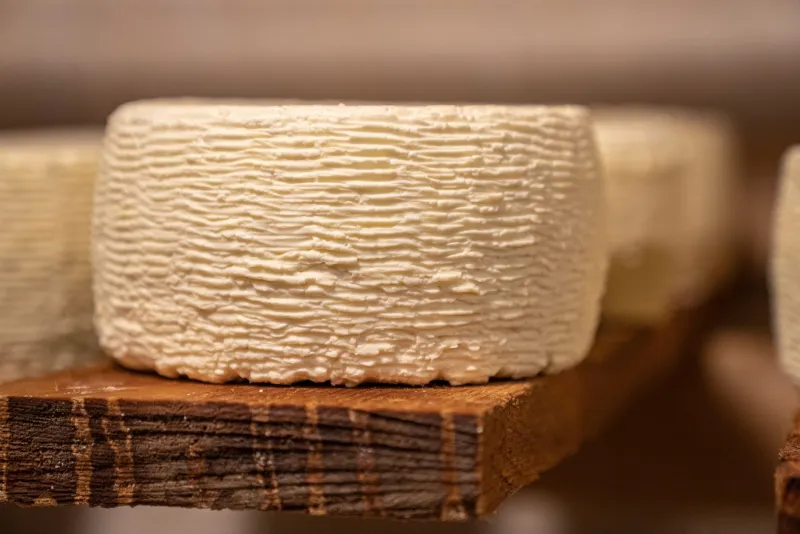
The comparison is not merely poetic. Consider the visual complexity of a properly aged Clothbound Cheddar from a Vermont farmstead: the rough-hewn, earth-toned rind bearing the literal impression of the cloth in which it was bound; the interior paste shifting from pale ivory at the center to a deeper, almost golden hue near the edges; crystalline pockets of tyrosine catching the light like mineral inclusions in stone. Or consider the silver-blue topography of a well-developed Roquefort, its interior landscape resembling nothing so much as a satellite photograph of a mountain range. These are not accidents. They are the legible record of craft, environment, and elapsed time — the very qualities that define what collectors prize in aged works on paper or patinated bronze.
The Aesthetic Vocabulary of the Cave
Among the cheesemakers and cheesemongers who have begun to articulate this visual dimension most deliberately, a shared vocabulary is emerging. Words like rind development, color gradation, paste texture, and surface ecology have migrated from the technical lexicon of affineurs — those specialists who oversee the aging and care of cheese — into the language of presentation and curation.
At Neal's Yard Dairy-inspired counters and at independent American fromageries from Portland, Oregon, to Asheville, North Carolina, the most design-forward operators are arranging their selections with something approaching gallery-level intentionality. Cheeses are grouped not merely by milk type or country of origin, but by visual character — soft, chalky whites alongside washed rinds in shades of amber and rust, hard aged wheels displayed in cross-section to reveal the interior architecture within.
Several American cheesemakers have begun collaborating directly with visual artists to deepen this conversation. In the Hudson Valley, a small number of farmstead producers have invited ceramicists and printmakers to create serving vessels and packaging that respond formally to the aesthetic qualities of specific cheeses — a matte, ash-gray stoneware board commissioned to complement the grey-bloomed rind of an ash-coated chèvre; a hand-letterpress label whose ink gradation mirrors the amber-to-ivory shift of a six-month cave-aged tomme. These are not marketing exercises. They are genuine acts of aesthetic collaboration, premised on the belief that the cheese and its context deserve to be considered together.
What the Collector's Eye Finds
For the culturally curious collector — someone already attuned to the visual qualities of craft objects, whether ceramics, textiles, or works on paper — artisan cheese offers a remarkably rich field of study. The rind of a cheese is, in the most literal sense, a record of its environment: the particular molds and bacteria present in a specific cave or aging room leave marks as distinctive as a regional school of painting. A Murray's Cave Aged Reserve wheel aged in the limestone caves beneath Manhattan carries different visual characteristics than an identically styled wheel aged in a Vermont cellar. Terroir, that concept borrowed from wine, is as legible on the surface of a cheese as it is in the color of a hillside vineyard's fruit.
Texture, too, rewards close attention. The difference between the supple, yielding paste of a young Camembert and the granular, almost crystalline density of a three-year Parmigiano-Reggiano is not merely a matter of flavor — it is a matter of structure, of how material transforms under the sustained pressure of time. A collector who has spent years handling works on paper, feeling the difference between a fresh sheet and a centuries-old document, will find this transformation immediately legible.
Curating the Cheese Board as a Gallery Statement
For those who wish to bring this sensibility to their own table, the cheese board offers an unusually direct opportunity for curation. The most intentional hosts are approaching the selection and arrangement of a cheese course with the same deliberateness they bring to hanging a gallery wall — considering the interplay of color, texture, and scale; the dialogue between soft and hard, young and aged, pale and deeply pigmented.
A well-composed board might place a snow-white fresh chèvre against the rust-orange washed rind of an Époisses-style American original, with a dark, charcoal-dusted ash rind as a visual anchor at the center — the same principles of contrast, balance, and focal point that govern the arrangement of works in an exhibition space. Accompaniments — honeycomb, dried fruit, artisan crackers in varied shades of gold and brown — function as the frame and the negative space, directing the eye and the palate toward the primary subjects.
Several American cheesemongers now offer what might fairly be called curatorial consultations: extended conversations in which a client's aesthetic preferences, flavor sensibilities, and the specific visual context of their table are all considered before a selection is made. This is collecting behavior, applied to an edible medium.
The Question of Provenance
Every serious collector understands that provenance matters. In the world of artisan cheese, provenance encompasses not only the farm and the animal but the specific cheesemaker's hand, the season in which the milk was gathered, and the particular conditions of the aging environment. The best American farmstead producers — among them Jasper Hill Farm in Vermont, Cowgirl Creamery in California, and Sequatchie Cove Creamery in Tennessee — are as committed to transparency of origin as any gallery representing living artists. Their cheeses carry names, stories, and a traceable lineage of craft decisions.
To approach these producers' work with a collector's sensibility is not to aestheticize food at the expense of its purpose. It is, rather, to recognize that the most profound craft objects have always been those that serve a function while simultaneously transcending it — that are useful and beautiful, consumable and worthy of contemplation. A great cheese, like a great ceramic vessel or a masterfully bound book, asks to be held, examined, and understood before it is used.
An Invitation to Look More Closely
The artisan cheese movement in America is, at its most ambitious, a movement about the restoration of attention. It asks producers, purveyors, and consumers alike to slow down, to engage the senses fully, and to recognize that the qualities we value in enduring works of art — the evidence of skilled hands, the legibility of time, the specificity of place — are present, in perishable and glorious form, in the work of the country's finest cheesemakers.
For the collector who already knows how to look, the cheese cave is simply the next gallery.