From Farm to Frame: How America's Culinary Devotees Are Finding Their Way to Original Art
From Farm to Frame: How America's Culinary Devotees Are Finding Their Way to Original Art
There is a particular kind of person who can describe the terroir of a Willamette Valley Pinot Noir with the same precision a critic might apply to a Diebenkorn canvas. They know their cheesemaker by name. They have strong opinions about the provenance of their olive oil. And increasingly, they are becoming some of the most thoughtful, instinctive art collectors in America.
This is not a coincidence. It is, in many ways, an inevitability.
A Shared Language of Craft
At its core, the appreciation of fine food and the appreciation of original artwork are exercises in the same fundamental discipline: the ability to recognize, and to honor, the labor of a human hand. A wheel of aged Comté and a handmade ceramic vessel share more than aesthetic appeal — they share a maker, a process, a geography, and a story. The collector who understands one is already fluent in the grammar of the other.
Mariana Delgado, a San Francisco-based food writer and self-described "obsessive home cook," describes her entry into art collecting as almost accidental. "I was at a ceramics fair in the Mission, the kind of place where you go to find a handmade butter dish," she recalls. "And I found myself standing in front of a small oil painting — maybe twelve by sixteen inches — of a kitchen table set for one. I didn't think about it. I just bought it."
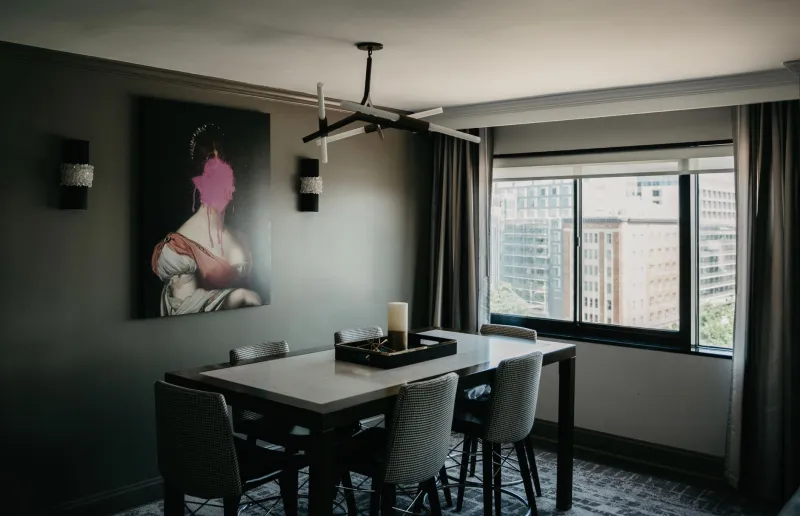
That painting now anchors her dining room. It was followed by two more works from the same artist, then by pieces from three others she discovered through studio open houses and online galleries. "I realized I was collecting the way I cook," she says. "Slowly, deliberately, with a lot of attention to where something comes from."
Provenance as a Common Currency
Among serious food enthusiasts, the question of provenance is almost reflexive. Where was this raised? Who grew it? How was it handled between field and table? These are not casual inquiries — they reflect a worldview in which the origin of a thing is inseparable from its value.
Art collectors, particularly those drawn to original works over reproductions, speak the same language. The question of who made something, under what conditions, and through what tradition is not supplementary information — it is the information. A painting is not merely a visual object; it is the record of a specific encounter between a specific artist and a specific moment in time.
This parallel is not lost on gallerists and artists who have begun, quietly, to court the culinary community as natural allies. Several prominent art fairs across the country now feature food programming not simply as hospitality, but as a deliberate gesture of cultural alignment — an acknowledgment that the person who cares deeply about what they eat is often the same person who will care deeply about what they hang.
The Sensory Collector
There is also a simpler, more physical truth at work here. Both fine food and fine art are fundamentally sensory experiences. They ask something of the body as well as the mind. A beautifully plated dish at a destination restaurant in Charleston or a tasting menu in Chicago's West Loop operates on the same register as a painting that stops you mid-step in a gallery: it demands presence, attention, and a willingness to be moved.
Collectors who come to art through food often describe their acquisitions in terms that sound more like flavor notes than formal analysis. "It has a kind of warmth to it," one Chicago-based restaurateur said of a large abstract work she purchased last year from an independent artist in Taos. "Like the color is doing something that bread does — it's nourishing, somehow."
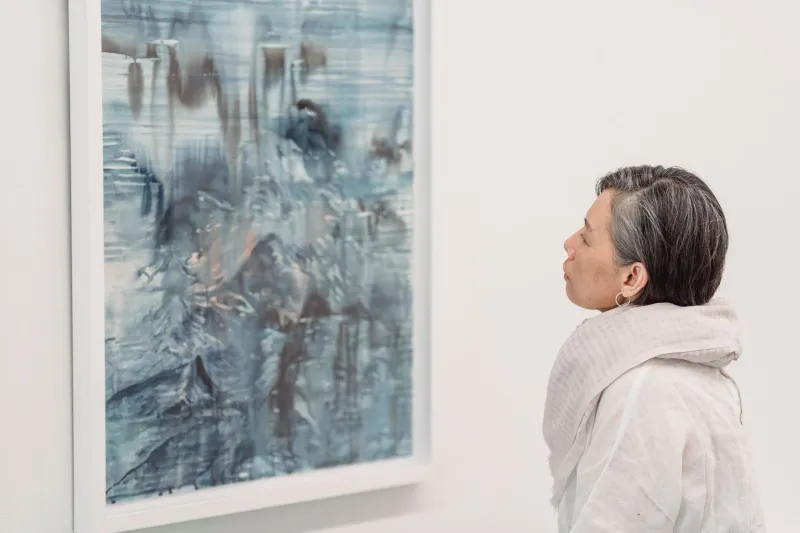
This is not naïve criticism. It is, in fact, a sophisticated mode of engagement — one that bypasses the intimidating apparatus of art-world jargon and arrives directly at the affective experience a work produces. Many artists would argue it is the most honest form of response their work can receive.
Practical Entry Points for the Curious
For the food lover who suspects they may also be an art lover, the entry points are more accessible than the traditional gallery circuit might suggest. A few considerations worth holding:
Begin with what you already love. If your kitchen is filled with handmade ceramics, hand-thrown stoneware, and carefully chosen textiles, you are already collecting. The step toward original two-dimensional work — a drawing, a small painting, a print — is less a leap than a natural extension of that same instinct.
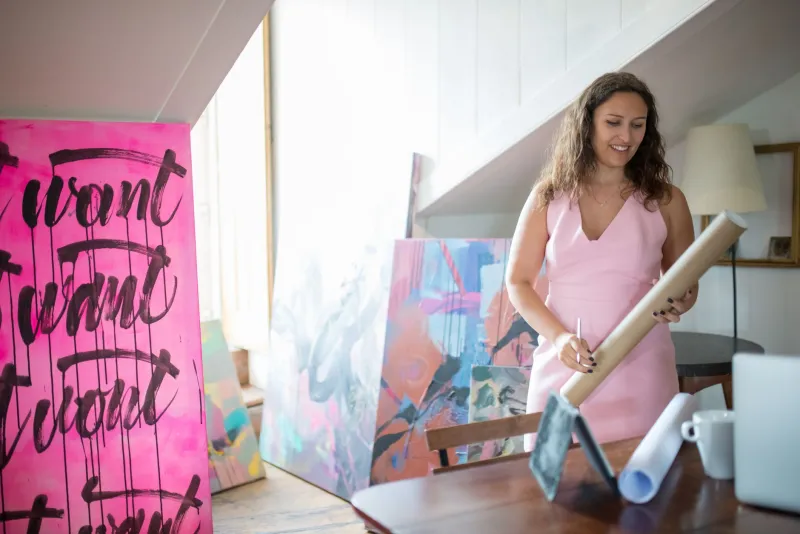
Seek out artists who share your values. Just as you might prioritize small-batch producers and regional farmers, look for artists working independently, producing limited bodies of work, and maintaining a direct relationship with their audience. The intimacy of that connection tends to produce both better art and more meaningful acquisitions.
Trust your palate. The vocabulary of taste — balance, complexity, finish, character — translates with surprising fidelity to the visual arts. If a work stays with you after you've left the room, that is not a trivial response. It is information.
Invest in the experience before the object. Attend studio open houses, follow artists whose work interests you, and allow your eye to develop at its own pace. The best food lovers know that palate education is a lifelong project. The same is true of visual literacy.
An Appetite for Beauty in All Its Forms
What the culinary world and the art world share, at their most elevated, is a refusal to treat beauty as incidental. In both domains, the finest practitioners argue — sometimes implicitly, sometimes with great conviction — that the quality of one's sensory environment is not a luxury but a form of ethics. To eat well, in this view, is to participate consciously in a chain of care that runs from soil to plate. To live with original art is to make a similar declaration: that the objects surrounding us deserve to have been made with intention.
America's most passionate food lovers already understand this. They have simply been waiting, in many cases, to realize that the same appetite that leads them to seek out the extraordinary in what they eat is fully capable of guiding them toward the extraordinary in what they see.
The table and the gallery wall are, in this light, not such different destinations. Both reward the person who arrives with curiosity, patience, and an educated willingness to be surprised.