Composed to Be Consumed: How the Discerning American Host Is Elevating the Charcuterie Board to an Art Form
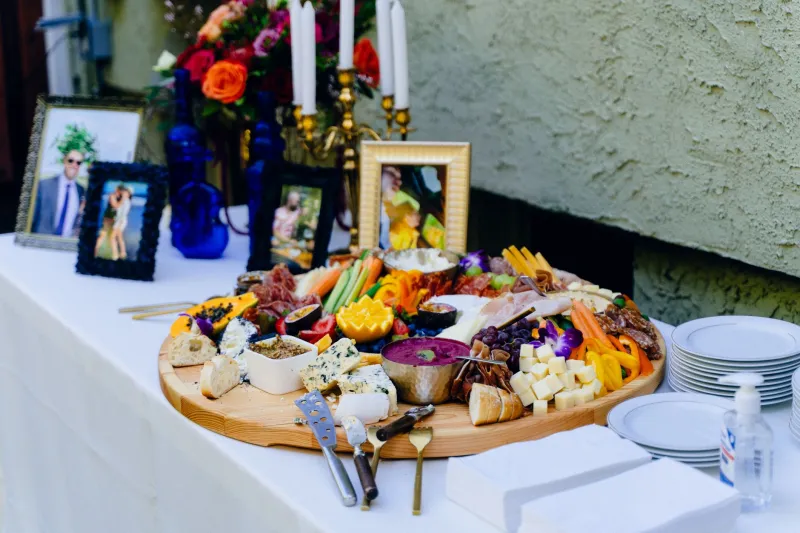
There is a moment, just before guests arrive, when a thoughtfully composed charcuterie board occupies a room the way a well-placed painting does — drawing the eye, anchoring the atmosphere, and signaling, without a word spoken, that the evening ahead has been considered with care. For a growing community of American hosts, food stylists, and culinary tastemakers, that moment is no longer incidental. It is the point.
The notion of the cheese and charcuterie board as a casual, improvisational affair — a handful of crackers, a wedge of supermarket brie, perhaps a cluster of grapes tossed in for color — is giving way to something altogether more intentional. What is emerging in its place is a practice that borrows as much from the principles of composition and curation as it does from the traditions of the table.
A New Vocabulary of the Board
To understand what separates a composed board from a mere spread, one must first appreciate the vocabulary that serious practitioners bring to the process. Balance, negative space, texture contrast, chromatic harmony — these are not terms typically associated with appetizers. Yet among the hosts who are redefining the form, they are entirely natural points of reference.
The board itself is the first decision, and it is never arbitrary. Reclaimed walnut slabs with live edges, hand-poured concrete platters, and locally thrown ceramic surfaces have replaced the generic slate and bamboo options that once dominated the category. Many collectors are now commissioning custom serving pieces directly from studio ceramicists, treating these objects as they would any other work acquired for the home — with provenance, intentionality, and a long view toward how the piece will age and be used across many seasons of entertaining.
The knife, too, has become a statement object. Hand-forged blades from American blacksmiths — studios in Vermont, Oregon, and Tennessee have developed particularly devoted followings — are selected not only for their utility but for their sculptural presence. A well-made cheese knife resting at the edge of a composed board is as much an act of curation as the provisions it serves.
The Provisions as Medium
If the vessels and tools constitute the frame, the provisions themselves are the medium. And here, the discerning host applies a collector's rigor to sourcing.
Single-origin aged cheeses from American farmstead producers — among them celebrated creameries in Vermont, California's Sonoma County, and the rolling pastures of Wisconsin — are selected for their visual character as much as their flavor profiles. A well-aged clothbound cheddar, its rind mottled with natural molds in ochre and grey, contributes texture and tonal complexity to a composition in a way that a uniform commercial wedge simply cannot. Bloomy rinds, their surfaces chalky white and softly luminous, introduce a quieter note. Washed-rind varieties, amber and almost translucent at their edges, add warmth.
Cured meats are chosen with similar attention to form. Thinly sliced coppa, fanned or loosely gathered into soft folds, introduces movement. Sliced salumi, arranged in overlapping sequences, creates rhythm. The hand of the artisan — in this case, the salumiere — is visible in the finished product, much as a printmaker's hand is legible in the pressure and texture of an impression.
Accompaniments are approached as accents: a small ceramic ramekin of honeycomb, its geometric structure a quiet counterpoint to the organic forms around it; a scatter of Marcona almonds; the deep jewel tones of dried figs or fresh Concord grapes placed with deliberate asymmetry. Nothing is accidental. Nothing is merely functional.
Collaborating Across Disciplines
Perhaps the most telling sign that the composed board has entered the realm of serious craft is the frequency with which its most accomplished practitioners speak in terms of collaboration. Several prominent food stylists and entertaining consultants working in cities such as New York, Los Angeles, and Chicago describe ongoing relationships with ceramic artists whose work they return to season after season — commissioning new pieces, acquiring limited production runs, and building what amounts to a working collection of serving objects that evolves alongside their aesthetic sensibility.
These collaborations often extend to the provisions themselves. Relationships with specialty importers, regional cheesemakers, and small-batch charcuterie producers mirror, in their intimacy and continuity, the relationships that serious collectors cultivate with gallerists and artists. The host knows the maker. The maker understands the host's vision. Over time, a shared language develops.
This relational dimension is not incidental to the practice — it is, for many, its most meaningful aspect. The composed board becomes a record of those relationships, a tangible expression of a network of makers and producers whose work the host has chosen to champion.
A Framework for the Collector's Table
For those who wish to approach their own entertaining with a more considered eye, the principles at work in the most accomplished composed boards offer a useful framework.
Begin with the surface. Invest in a serving piece that genuinely interests you — a hand-thrown platter, a slab of locally sourced hardwood, a piece of antique marble. The surface sets the tone for everything that follows and, unlike the provisions it holds, will return to your table many times over.
Source with specificity. Rather than assembling provisions from a single grocery run, seek out two or three items from producers whose work you find genuinely compelling. A single exceptional aged cheese from a farmstead creamery will do more for a board's distinction than a dozen undistinguished varieties.
Think in terms of composition, not quantity. Restraint is a virtue. A board with five elements, each chosen and placed with intention, will read with more clarity and sophistication than one crowded with a dozen options competing for attention.
Allow the tools to participate. A beautiful knife, a thoughtfully chosen small bowl, a linen placed with care — these details extend the composition beyond the food itself and signal to your guests that the experience has been designed, not merely assembled.
Embrace impermanence. Unlike a painting or a ceramic, the composed board is made to be consumed. There is something genuinely moving about that — a work created to disappear, to be shared, to nourish. The best hosts understand that this transience is not the board's limitation. It is its particular grace.
The Ephemeral Gallery
What the most visually obsessed American hosts have understood, perhaps intuitively, is that the composed board occupies a unique position in the broader landscape of domestic collecting and display. It is, by its nature, temporary — a gallery installation that lasts an evening before being dismantled by the very people who came to appreciate it. And yet the objects that support it, the ceramic vessels, the forged knives, the linen, the wood, endure. They carry forward the memory of each composition, accumulating meaning with each use.
In this sense, the charcuterie board is not so different from any other act of curation. It is a considered arrangement of beautiful things, offered generously to others, in the hope that they will pause — if only for a moment — and truly see.