Bound in Beauty: How America's Most Discerning Collectors Are Treating Books as the New Fine Art
Bound in Beauty: How America's Most Discerning Collectors Are Treating Books as the New Fine Art
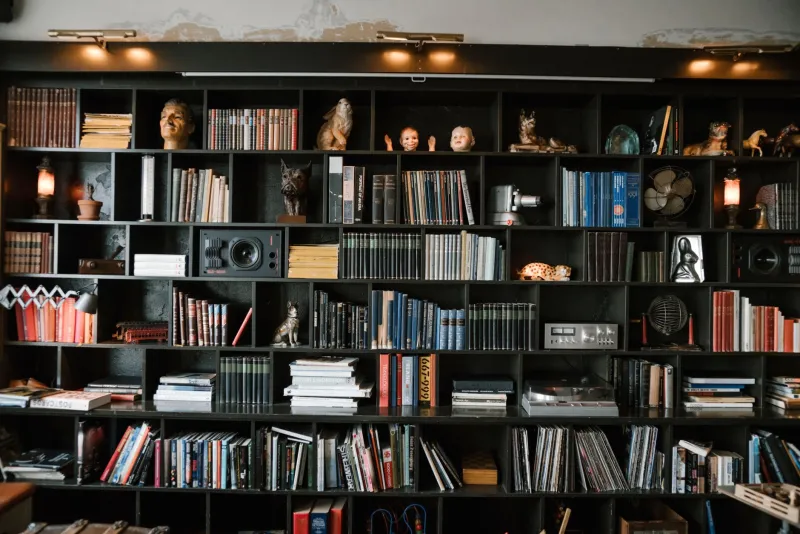
There is a particular kind of pleasure reserved for the collector who reaches for a volume from a well-ordered shelf and finds, in the act of opening it, something closer to entering a gallery than reading a page. The weight of archival paper. The precision of a hand-numbered lithograph tucked between chapters. The scent of a binding that speaks to genuine craft. For a growing number of Americans who have spent years cultivating wine cellars and art walls with equal devotion, the personal library has emerged as the next great arena of connoisseurship — and, increasingly, of serious collecting.
This is not a trend born of nostalgia for the printed word. It is something more intentional: a recognition that the finest books produced at the intersection of food, wine, and visual art occupy a category entirely their own. They are objects of beauty before they are instruments of knowledge.
The Library as Living Collection
Ask any serious collector about the bookshelves in their home, and the conversation quickly moves beyond titles. What publishers produced the edition? Was it a limited run? Is the binding linen or cloth? Does the volume include original artwork, or merely reproductions? These are the questions of someone who understands that a book, at its highest expression, is an artifact — one that appreciates in significance precisely because it was made with care for an audience willing to receive it that way.
Across the United States, a distinct cohort of readers — many of them already established collectors of wine, ceramics, and original painting — has begun applying this same critical eye to their libraries. In cities like San Francisco, New York, Charleston, and Chicago, personal book collections are being curated with the same rigor one might bring to assembling a cellar of first-growth Bordeaux. Rare culinary monographs sit beside signed artist catalogs. Illustrated volumes on Japanese knife-making share shelf space with limited-edition poetry collections accompanied by original prints. The result is a library that functions, in every meaningful sense, as a gallery.
The Publishers and Imprints Worth Knowing
For those beginning to approach their bookshelves with collector's intent, fluency in the publishing landscape is essential. Several imprints have distinguished themselves as producers of volumes that cross the threshold from reference material into genuine collectibles.
Phaidon Press has long been recognized for its art and food titles produced to a visual standard that few publishers match. Their monographs on culinary masters — from René Redzepi's multi-volume Noma series to their acclaimed art histories — are frequently sought by collectors who prize design integrity as much as content.
Rizzoli New York occupies a similarly rarefied position, particularly for its collaborations with American chefs, winemakers, and artists who understand that a book bearing their name must also bear their aesthetic. Signed copies of Rizzoli titles have become reliable fixtures at estate sales and specialty auctions, often commanding prices that reflect their status as objects rather than merely texts.
Smaller, independent imprints deserve equal attention. Abrams Books, Chronicle Books, and boutique publishers such as Ten Speed Press have each produced limited editions and artist-illustrated volumes that serious collectors are beginning to track with the same diligence they bring to gallery openings. The secondary market for these titles, while still developing, is gaining momentum.
Culinary Literature as Collectible Art
The overlap between food culture and visual art has never been more fertile ground for the collector. A signed first edition of a celebrated American chef's debut volume — particularly one illustrated by a working artist rather than a staff photographer — occupies a category that neither the art market nor the book market has fully claimed. That ambiguity is, for the discerning collector, an opportunity.
Consider the illustrated culinary essay: a form that has produced some of the most visually arresting volumes in recent American publishing. When a writer of genuine literary sensibility on the subject of, say, Burgundy or Appalachian food traditions collaborates with a printmaker or watercolorist, the resulting volume is something a library catalog struggles to classify. It is part cookbook, part artist's book, part cultural document. For the collector who understands value in these terms, it is also a remarkable acquisition.
Similarly, wine literature has produced a body of illustrated and annotated volumes — particularly around the great regions of France, Italy, and increasingly, California and Oregon — that rewards the collector who looks beyond the sommelier's reference shelf. Signed copies of Kermit Lynch's Adventures on the Wine Route, for instance, or the beautifully produced annual editions from certain Napa Valley estates, have found their way into collections precisely because they satisfy both the bibliophile and the aesthete.
Building the Shelf with Intention
For those prepared to approach their library as they would any other collecting discipline, a few guiding principles prove consistently useful.
Prioritize the signed and the limited. A standard trade edition of even the most celebrated culinary title will not appreciate in the way a signed, numbered copy will. Seek out first editions, artist's proofs, and volumes produced in runs of five hundred or fewer. Many of the most collectible books in this category were never widely distributed — they were sold through the artist's studio, the winery's mailing list, or a single independent bookshop.
Consider condition with the seriousness of a gallerist. Dust jackets matter. Bindings matter. A volume with a cracked spine or a price sticker on the cover is a diminished object, however fine its contents. Store books away from direct light, and handle the most significant volumes with the care one would extend to works on paper.
Develop relationships with specialist booksellers. Just as the serious art collector cultivates relationships with gallerists, the bibliophile collector benefits enormously from knowing the dealers who specialize in fine illustrated books, artist's publications, and culinary literature. Shops such as Hennessey + Ingalls in Los Angeles, Dashwood Books in New York, and a handful of regional independents have become essential resources for collectors in this space.
Follow the artists, not only the authors. Some of the most collectible volumes in this category are distinguished not by their writers but by the visual artists who contributed to them. An illustrated edition of a wine region memoir becomes a different object entirely when the illustrations are by a painter whose gallery work commands serious prices. Train your eye to recognize these collaborations before the broader market does.
The Library as Legacy
There is something quietly enduring about a personal library assembled with this degree of intention. Unlike a wine cellar, which is ultimately consumed, or a gallery wall, which may be dispersed, a library of beautiful and significant books accumulates meaning over time. It becomes a record of taste, of curiosity, of the particular moment in American cultural life when food, wine, and visual art converged in ways that produced objects worth keeping.
For the collector who has already devoted serious attention to what hangs on the wall and what rests in the cellar, the shelf awaits. It is the quietest corner of the collection — and, in the right hands, among the most revealing.