Liquid Gold, Curated: How America's Most Intentional Hosts Are Building Olive Oil Collections Worth Savoring
Liquid Gold, Curated: How America's Most Intentional Hosts Are Building Olive Oil Collections Worth Savoring
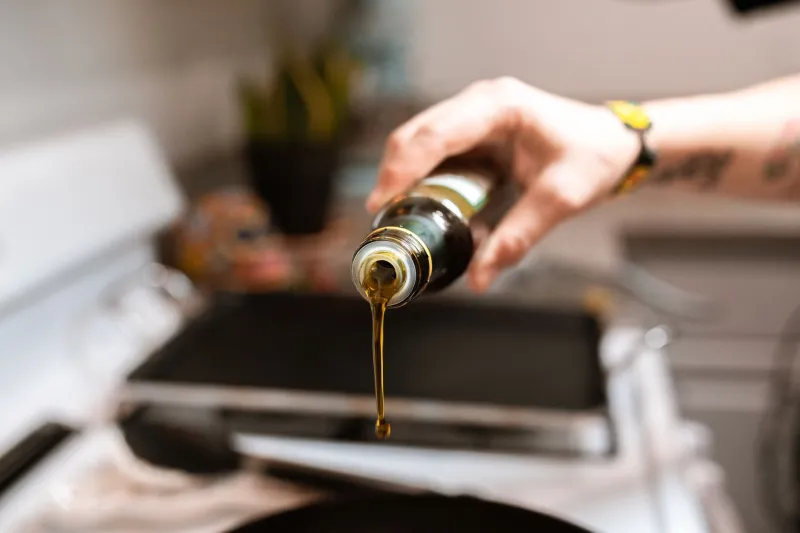
There is a particular kind of stillness that descends over a well-appointed kitchen when a host uncorks a bottle of early-harvest Sicilian nocellara and tilts it slowly over a warmed ceramic bowl. The oil moves with deliberate weight, catching the light in a way that shifts from pale chartreuse to deep, almost luminous gold. For those who have cultivated a serious relationship with premium olive oil, this moment is not merely culinary preparation. It is, in every meaningful sense, an aesthetic experience.
Across the United States, a discerning cohort of food enthusiasts, collectors, and hosts has quietly elevated olive oil from pantry staple to object of connoisseurship. They speak of harvest years the way sommeliers speak of vintages. They trace provenance to specific hillside groves in Crete, Tuscany, or California's Sonoma County. They arrange their collections by region, polyphenol intensity, and producer philosophy — and they present these oils at the table with the same intentionality a gallery owner might bring to hanging a new acquisition.
The Collector's Eye, Applied to the Grove
What distinguishes a casual olive oil enthusiast from a genuine collector is, above all, a cultivated vocabulary of attention. Much as a serious art collector learns to read the visual language of a canvas — the weight of a brushstroke, the particular tension in a composition — the olive oil connoisseur trains the senses to perceive gradations of bitterness, the peppery finish that signals high polyphenol content, the grassy immediacy of an oil pressed within hours of harvest.
Elena Vasquez, a San Francisco–based interior designer and avid collector, maintains what she describes as a "working library" of eighteen to twenty-four olive oils at any given time. Arranged on a temperature-controlled shelf in her kitchen — itself a room she has designed with the same considered attention she brings to her clients' living spaces — the bottles represent producers from Greece, Spain, Portugal, Lebanon, and California's Central Valley. "I approach it the way I approach acquiring a new piece for a room," she explains. "I want to understand where it comes from, who made it, and what philosophy guided the decisions along the way. The object itself should tell you something."
That insistence on narrative — on the story embedded in the object — is a through line connecting serious olive oil collecting to the broader culture of connoisseurship. Provenance matters. A bottle labeled simply "extra virgin" from an unspecified Mediterranean blend tells the collector almost nothing. A single-estate oil from a small Cretan producer, pressed from koroneiki olives at peak ripeness in a documented harvest window, tells a story with a beginning, a middle, and a finish that lingers long after the tasting.
The Bottle as Object
It would be a mistake to overlook the aesthetic dimension of the vessels themselves. The finest small-batch olive oil producers have invested considerable creative capital in their packaging, and with good reason: the bottle is the first encounter, the frame before the painting. Dark glass in deep greens and ambers protects the oil from light degradation while lending a sculptural presence to the shelf. Hand-applied labels printed on archival paper, embossed producer seals, and wax-dipped closures signal the same attention to craft that distinguishes a limited-edition art print from a mass reproduction.
Several American producers, particularly those operating in California, have collaborated with independent graphic designers and ceramicists to produce vessels that function as collectible objects in their own right. A small number of Napa Valley producers now release annual "harvest editions" in numbered bottles — a practice borrowed directly from the world of fine wine and, before that, from the print and edition culture of contemporary art.
For the design-conscious host, these bottles earn their place on the table as much as any carefully chosen serving piece. The act of presenting a distinguished olive oil to guests — explaining its origin, its harvest date, the particular character of the season in which it was made — transforms a meal's opening moments into something closer to a gallery walkthrough.
Tasting as Connoisseurship
Professional olive oil sommeliers — a credential that exists, rigorously, through organizations such as the North American Olive Oil Association and the Olive Oil Sommelier Certification program — describe the formal tasting process in terms that will feel immediately familiar to anyone trained in wine or art criticism. One evaluates fruitiness, bitterness, and pungency as the primary attributes, while attending to defects (rancidity, mustiness, a winey or vinegary quality) that disqualify an oil from the highest tier of classification.
But beyond the formal rubric, experienced collectors speak of something more intuitive — a quality of presence, of aliveness, that distinguishes an exceptional oil from a merely good one. "There are oils that feel inevitable," says Marcus Trent, a New York–based chef and olive oil educator who leads private tasting sessions for clients in the Hudson Valley. "You taste them and you understand immediately that every decision made between the grove and the bottle was the right one. That's rare. And when you find it, you want to hold onto it."
This impulse — to hold onto, to return to, to share with care — is the very impulse that animates collecting in any domain.
Building a Collection with Intention
For those inclined to begin their own olive oil library, a few principles borrowed from the art world translate remarkably well. Seek out producers who communicate openly about their methods, their harvest dates, and their sourcing — transparency is as important here as it is in any reputable gallery. Prioritize oils with a clearly stated crush date rather than simply a "best by" designation; freshness is paramount, and an oil more than eighteen months from harvest has almost certainly lost its most compelling qualities.
Consider acquiring across regions to develop comparative understanding — a Tuscan frantoio will express itself very differently from a Lebanese souri or a California arbequina, and the contrast between them is instructive in ways that no single bottle can be alone. And resist the temptation to treat the collection as purely decorative. The finest olive oil, like the finest art, is meant to be engaged with, experienced, and — in this case — consumed before its moment passes.
A Living Collection
Perhaps what makes olive oil collecting so compelling to those who have discovered it is precisely its impermanence. Unlike a painting or a sculpture, which endures across generations, an exceptional olive oil exists within a narrow window of vitality. It arrives, it offers itself fully to those present and attentive enough to receive it, and then it fades. There is something genuinely moving in that arc — something that rewards the collector not merely with possession, but with presence.
At its finest, a curated olive oil collection is not a pantry. It is a record of attention, a testimony to the belief that even the most elemental ingredients of a meal deserve to be chosen, understood, and appreciated with the full engagement of a discerning eye.