The Kitchen Deserves Better: How Serious Home Cooks Are Turning Their Most-Used Room Into a Living Gallery
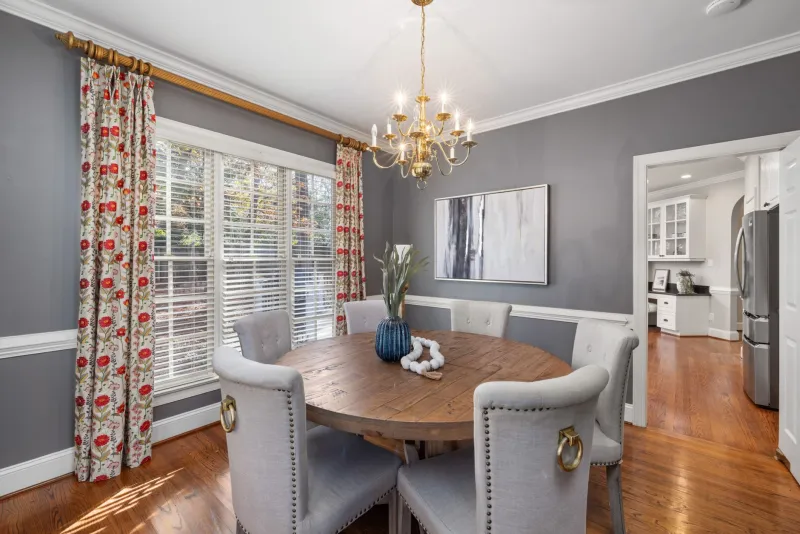
There is a particular kind of irony in the way Americans decorate their homes. The dining room — a space many households enter fewer than a dozen times a year — receives the most considered artwork, the most deliberate arrangement, the most reverent treatment. Meanwhile, the kitchen, where coffee is brewed before the rest of the world wakes, where Sunday sauces simmer for hours, where the real texture of daily life unfolds, is left to fend for itself with a chalkboard wall and a framed print of a rooster.
That arrangement is beginning to change.
Across the country, a discerning cohort of home cooks — people who regard their kitchens as creative studios as much as functional spaces — are rethinking what belongs on those walls, shelves, and open surfaces. They are commissioning original paintings. They are investing in handmade ceramics that are meant to be used, not merely admired. They are sourcing woven textiles and hand-thrown vessels from independent American artists and placing them squarely in the middle of the action. The kitchen, in their estimation, is the most honest room in the house — and it deserves art that can match that honesty.
Why the Kitchen Has Been Overlooked
The reluctance to hang serious artwork in a kitchen is understandable. Humidity fluctuates. Grease travels. Sunlight from above a sink window can be unforgiving. These are legitimate concerns, and for a long time they served as sufficient justification for keeping original works confined to more controlled environments.
But experienced collectors will recognize this as a failure of imagination rather than a genuine obstacle. The question was never whether art could survive in a kitchen. It was whether collectors were willing to think carefully enough about the pairing of medium, material, and placement to make it work.
The answer, increasingly, is yes.
Selecting Works That Can Inhabit the Space
Not every piece is suited to life near a stove, and part of the pleasure of building a kitchen collection is developing the connoisseurship to know the difference. A few guiding principles help frame the selection process.
Oil and acrylic paintings are among the most resilient options for kitchen walls, provided they are properly varnished. A matte or satin varnish creates a protective layer against airborne moisture and the subtle particulates that cooking generates over time. Works hung away from direct heat sources and protected from prolonged direct sunlight will remain stable for decades with minimal intervention.
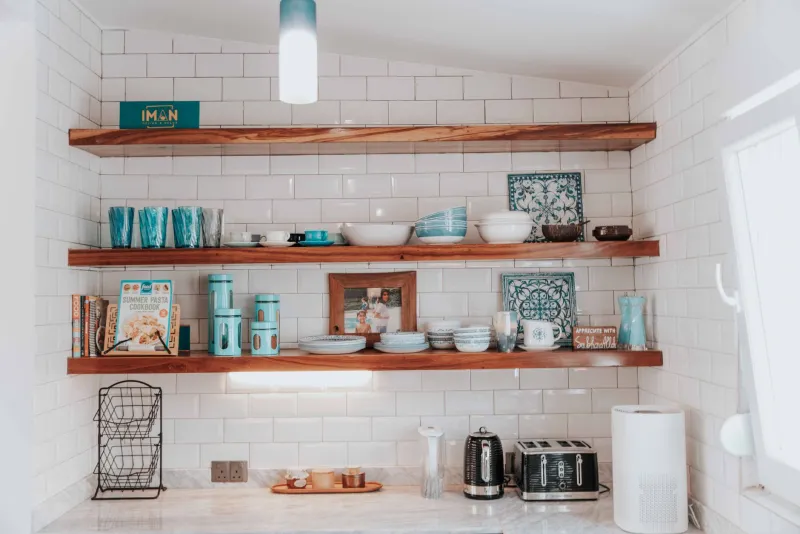
Ceramics and stoneware are perhaps the most natural fit of all. Handmade vessels — whether a wheel-thrown pitcher, a set of hand-painted tiles, or a sculptural piece displayed on open shelving — carry the same elemental quality as the ingredients a serious cook keeps close at hand. There is a visual and philosophical coherence to surrounding oneself with objects that were also shaped by fire. Many American studio potters working today produce pieces that occupy the space between function and fine art with remarkable fluency.
Textile works, including woven wall hangings and hand-dyed fiber pieces, require somewhat more care in placement. Kept away from steam and direct cooking zones, a well-chosen textile can introduce warmth and texture that no canvas can replicate. The key is to treat the kitchen's different zones — the prep area, the sink wall, the corner nook — as distinct micro-environments, each with its own display logic.
Works on paper demand the most caution, but they are not categorically off-limits. Framed behind UV-protective glass and positioned thoughtfully, a botanical illustration or an abstract study can hold its place with dignity. The framing investment simply needs to be proportional to the vulnerability of the medium.
The Philosophy of Cooking Alongside Art
Beyond the practical considerations lies a more interesting question: what does it mean to cook in the presence of original art?
For the collectors and culinary enthusiasts who have made this commitment, the answer is almost always the same. The art changes how they inhabit the room. A painting encountered first thing in the morning, in the particular light of a kitchen, becomes something different from a painting seen in a gallery or a living room. It is witnessed in a state of intimacy — before the day has fully formed, during the meditative rhythm of chopping and stirring, in the low light of an evening when the kitchen is the last room still warm.
Several artists whose work appears regularly in thoughtfully curated American kitchens speak openly about the appeal of that placement. Works depicting food, abundance, the rituals of harvest and preparation, have a long and distinguished history in Western painting — from the Dutch still life tradition to the bold market scenes of contemporary American painters working in oil. These are not decorative afterthoughts. They are a genuine genre, and they belong precisely where the subject matter lives.
But the kitchen need not be limited to food-adjacent imagery. Abstract works, landscape studies, botanical drawings, and figurative pieces all find new resonance when encountered daily rather than occasionally. The repetition of proximity is itself a form of connoisseurship.
Practical Guidance for the Committed Cook-Collector
For those prepared to begin treating their kitchen as a legitimate gallery space, a few practical considerations are worth noting.
First, inventory the room honestly. Identify which walls receive direct sunlight, which surfaces are closest to heat and steam, and which areas are genuinely protected. This assessment should precede any acquisition decisions.
Second, prioritize durability without sacrificing ambition. The goal is not to fill the kitchen with work that merely survives there — it is to find work that genuinely thrives in that environment. A beautifully glazed ceramic piece on open shelving is not a compromise. It is a considered choice.
Third, engage directly with artists. Independent American artists who work in ceramics, oil, and mixed media are often deeply interested in how and where their work lives. Many are willing to discuss placement, finishing, and even commission pieces with specific environments in mind. That conversation is one of the genuine privileges of collecting original work rather than reproductions.
Finally, resist the impulse to over-curate. The kitchen is a working room, and the art within it should feel at home in that context rather than straining against it. A single, well-chosen painting above a farmhouse sink can do more for a space than a dozen pieces competing for attention.
The Most Honest Room in the House
The dining room will always have its place in the art-conscious home. But there is a growing recognition among serious collectors that the spaces most worth adorning are the ones most fully inhabited — the rooms where life actually happens, where the rituals are daily rather than ceremonial.
For the home cook who takes both food and art seriously, the kitchen is that room. It is where creativity is practiced, where ingredients are transformed, where the sensory life of a household is most fully expressed. Original art, placed with care and selected with discernment, does not intrude on that life. It deepens it.
The rooster print had its moment. It has passed.