The Intimate Collection: Acquiring Original Art When Space Is the Constraint
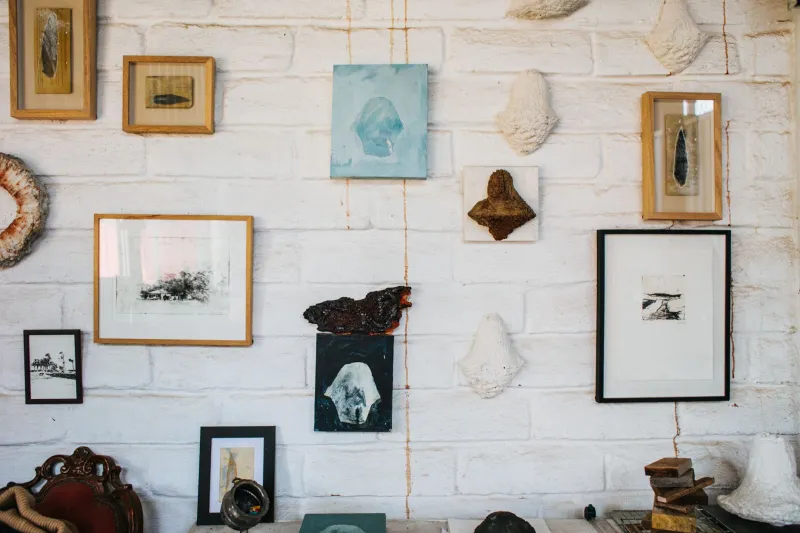
The mythology of the serious art collector tends toward the grand: soaring ceilings, dedicated gallery walls, the kind of domestic architecture that announces its intentions before a single work is hung. It is a compelling image, and for a certain stratum of the American collecting class, it is a reality. But it is not the only reality — and it may not even be the most interesting one.
Some of the most rigorous and genuinely personal collections in this country exist in New York studio apartments, San Francisco flats, Chicago condominiums, and Boston brownstone units where the available wall space could be measured in feet rather than acres. The constraint, it turns out, is not the enemy of serious collecting. In many cases, it is its most demanding and productive teacher.
Scarcity as Editorial Discipline
The collector with unlimited wall space faces a problem that is rarely acknowledged: the absence of consequence. When there is always room for one more piece, the pressure to be certain about any individual acquisition diminishes. The result, frequently, is collections that are broad but diffuse — accumulations that reflect enthusiasm without expressing a genuine point of view.
The space-constrained collector enjoys no such luxury. Every acquisition displaces something else, or occupies a position that might have held something different. This enforced scarcity operates as a powerful editorial mechanism, demanding that the collector answer a question that comfortable abundance allows one to defer indefinitely: What do I actually believe about this work?
This is not a comfortable question. It is, however, the question that produces the most honest and ultimately the most coherent collections. The discipline of limited space pushes the collector toward the kind of sustained, serious looking that distinguishes genuine connoisseurship from enthusiastic acquisition.
Thinking Vertically — and Unconventionally
For collectors working within compact environments, the first practical shift is one of spatial imagination. The conventional assumption — that art requires a generous expanse of uninterrupted wall — is both architecturally limiting and historically dubious. Some of the most celebrated domestic collections in American history have existed in intimate spaces, arranged with a density and layering that contemporary minimalist aesthetics have trained us to regard with suspicion.
The salon-style hang, in which works are grouped in close proximity across a wall from chair rail to ceiling, is not merely a historical curiosity. It is a legitimate and visually compelling approach to displaying a body of work in limited space — one that, when executed with care, creates a sense of abundance and intention rather than clutter. The key, as with all successful arrangements, lies in the quality of the individual works and the coherence of the relationships between them.
Beyond the wall itself, the space-conscious collector does well to consider surfaces that conventional decorating wisdom tends to underutilize. Narrow ledges designed for architectural detail become display platforms for small works on paper or unframed panels. The tops of bookshelves and cabinets offer unexpected vertical territory. Even the inside of a well-proportioned cabinet, fitted with a single small work and opened as a deliberate reveal, can function as a miniature gallery moment of genuine sophistication.
The Art of Rotation
Perhaps the most significant conceptual shift available to the space-limited collector is the embrace of rotation as a collecting strategy rather than a compromise. The collector who acquires more works than can be displayed simultaneously — and stores them with appropriate care — creates a living collection that evolves across time, offering the sustained pleasure of rediscovery that static display cannot.
This practice, common among serious collectors of works on paper and photography, carries real psychological and aesthetic advantages. A work that has been in storage for six months returns to the wall with a freshness of perception that long familiarity erodes. The collector sees it again, rather than past it — a distinction that matters considerably for the ongoing relationship between a person and the art they have chosen to live with.
Proper storage for works on paper and smaller canvases need not be elaborate or expensive. Archival flat files, available in a range of sizes suited to residential use, provide museum-quality protection in a relatively compact footprint. For framed works, padded vertical storage systems designed for residential use occupy surprisingly little floor space. The investment in proper storage is, in every sense, an investment in the collection itself.
Scale as a Collecting Philosophy
The space-constrained collector is often drawn, by necessity, toward smaller-format works — and frequently discovers, in that constraint, a genuine aesthetic preference. The intimate scale of a small oil study, a carefully worked piece of works on paper, or a modestly sized photograph demands a different quality of attention than a large-format work. It asks the viewer to move closer, to slow down, to bring the eye into direct and sustained contact with the surface.
This is not a lesser experience. It is, in many respects, a more concentrated one. Some of the most significant works in the history of Western art are small in physical scale. The cabinet paintings of the Dutch Golden Age — works designed for the domestic spaces of merchants and professionals rather than the walls of palaces — are among the most technically accomplished and emotionally resonant objects in the canon. Scale and significance have never been synonymous.
For the American collector building a serious collection in a compact urban environment, this historical context is more than reassuring — it is actively instructive. The decision to focus on small-format works of exceptional quality, acquired thoughtfully over time, is not a concession to circumstance. It is a collecting philosophy with distinguished precedent.
Quality Over Quantity: The Only Metric That Matters
Every experienced collector arrives, eventually, at the same conclusion: the number of works in a collection is among its least interesting qualities. What endures — what gives a collection its character, its authority, its capacity to reward repeated engagement — is the quality of individual works and the coherence of the vision that assembled them.
For the space-limited collector, this conclusion arrives earlier and by necessity. But arriving at it earlier is not a disadvantage. The collector who learns, in a four-hundred-square-foot apartment, to be genuinely rigorous about what earns a place on the wall carries that discipline forward into every subsequent collecting decision, regardless of how much space eventually becomes available.
The intimate collection, built with patience, seriousness, and the honest application of a developing aesthetic intelligence, is not a diminished version of collecting. It is collecting at its most essential — stripped of the ambient noise of accumulation, focused entirely on the relationship between a person and the art that genuinely matters to them. That relationship, wherever it unfolds, is the whole point.