From Eye to Palate: Developing the Sensory Vocabulary of a True Connoisseur
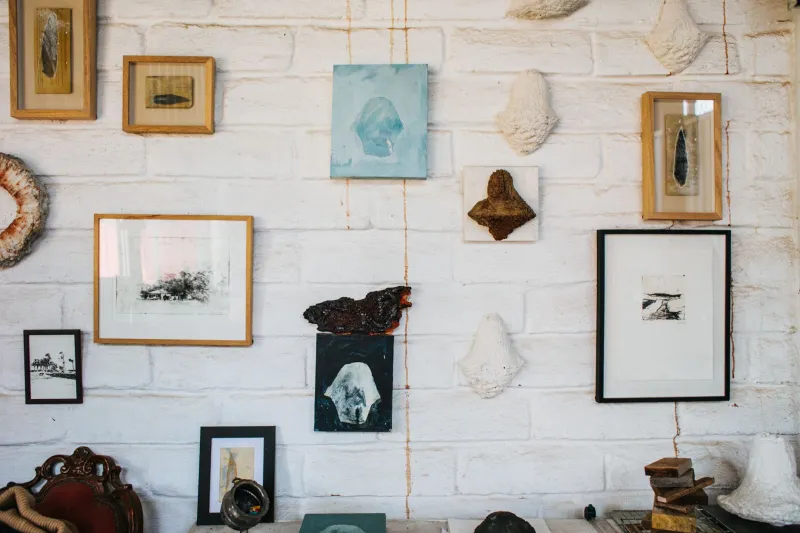
There is a moment familiar to any serious collector: standing before a work of art, allowing the eye to move slowly, deliberately, across its surface — noting tension and resolution, weight and lightness, the way a particular passage of color either earns or undermines the whole. It is an act of disciplined attention. What is less commonly understood is that the same cognitive architecture required to evaluate a painting or a piece of sculpture is precisely what separates the casual diner from the genuine gastronome.
Sensory literacy — the capacity to perceive, name, and ultimately contextualize what one experiences — is not compartmentalized by medium. It is a transferable faculty. And for those already practicing it in front of gallery walls, the path to a sophisticated palate is shorter than they might imagine.
The Parallel Grammar of Perception
Consider how a trained eye approaches a canvas. Before any judgment of quality or preference, there is inventory: What is the dominant structure? Where does the composition create movement? What is suppressed, and what is foregrounded? This vocabulary — balance, contrast, depth, tension, restraint — maps onto the experience of tasting with an almost uncanny precision.
A wine with high acidity and low residual sugar presents a tension not unlike a stark, high-contrast drawing. A barrel-aged bourbon layered with vanilla, dried fruit, and a long, warming finish reads compositionally the way a richly glazed Old Master painting does: complex, warm-toned, deliberately built. A raw-milk cheese with bright lactic sharpness and an earthy finish is, in its own register, as structurally interesting as a work that holds competing formal concerns in uneasy but compelling balance.
The collector who has spent years developing a visual language already possesses the conceptual scaffolding. The work is simply one of translation.
Moving Beyond Preference
The most common obstacle between an intelligent person and genuine gustatory sophistication is the reflexive retreat to preference. "I like it" or "I don't like it" functions as a closed door. In visual art, seasoned collectors long ago learned that personal taste and critical understanding are related but distinct pursuits — that one may admire the formal rigor of a work that does not bring particular pleasure, or recognize the limitations of something immediately appealing.
The same discipline applies at the table. The goal of developing a serious palate is not to override enjoyment but to expand the range of what can be perceived and, therefore, what can be enjoyed. A Nebbiolo from the Piedmont region of Italy, with its formidable tannin structure and paradoxically delicate aromatics, is not immediately seductive. But approached with the patience one would bring to a demanding work on paper, it reveals itself as something genuinely extraordinary — architecture in a glass.
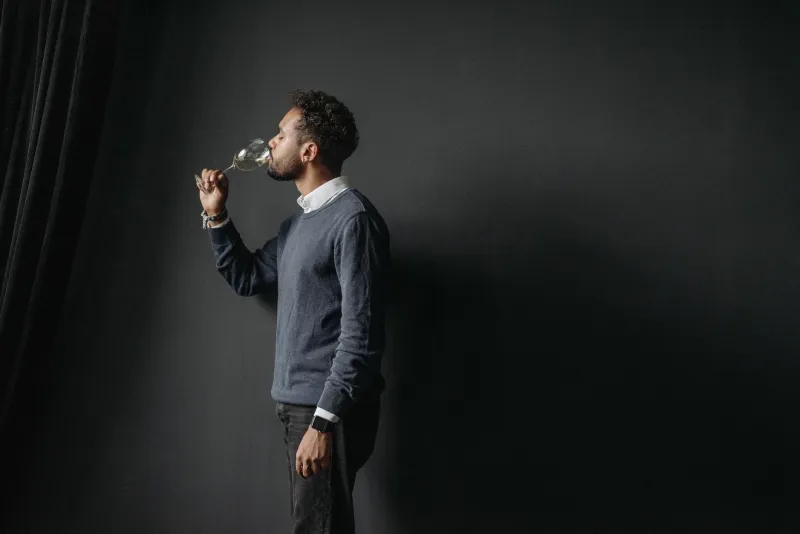
Practical training begins with deliberate slowing. Before forming any opinion, spend sixty seconds simply cataloguing sensation: Is there sweetness, and where does it appear — at the front of the palate or the finish? Is there acidity, and does it feel bright and clean or sharp and aggressive? What aromas appear before the first sip, and how do they shift afterward? This is the tasting equivalent of spending time with a work before reading its label.
Building a Shared Vocabulary
One of the great pleasures of collecting, in any discipline, is the community of language it creates. Connoisseurs of painting speak of impasto and sfumato, of pentimento and chiaroscuro — terms that, once learned, make previously inchoate perceptions suddenly articulable. The world of food and drink offers equally rich terminology, and acquiring it is not an act of affectation but of precision.
In wine, the concept of terroir — the way soil, climate, and geography express themselves in the glass — finds its visual analogue in the idea of provenance and material honesty in craft objects. The taste of minerality in a Chablis is not metaphorical; it is a genuine chemical phenomenon, and learning to identify it is no different from learning to distinguish the particular quality of light in a plein air painting from the studio-constructed light of academic work.
For spirits, the language of the distiller — mash bill, barrel char, angel's share, congeners — opens a door into the same kind of informed appreciation that knowledge of pigment, ground preparation, and varnish brings to the understanding of historical painting. Context does not diminish pleasure; it multiplies it.
The Practice of Comparative Tasting
Among the most effective methods for accelerating sensory literacy is the comparative exercise — the tasting equivalent of hanging two works side by side to understand each more clearly. Experienced collectors know that a painting's strengths and weaknesses emerge most sharply in dialogue with another work, particularly one that shares a formal concern but resolves it differently.
At the table, this translates directly. Tasting two Chardonnays from different American appellations — say, one from a warm Napa valley floor and one from a cooler coastal Sonoma site — illuminates what climate contributes to structure and fruit character in a way that no single bottle can. Similarly, sampling two expressions of the same whiskey distillery at different ages reveals how time functions as a compositional tool, softening, deepening, and integrating what might have been raw and angular in youth.
The collector's instinct — to seek out comparison, to build context through accumulation of experience — is precisely the instinct that produces a serious palate.
Patience as Method
Perhaps the most important principle shared between visual connoisseurship and gustatory sophistication is the willingness to return. No serious collector forms a final opinion on a significant work after a single encounter. They return, in different lights, in different moods, with different companions. They allow the work to reveal itself across time.
The same generosity of attention applied to a bottle of wine across an evening — noting how it changes in the glass as it opens, how the tannins soften, how secondary aromas emerge — produces not merely a more informed opinion but a more complete experience. The collector who treats a meal or a tasting with the seriousness they would bring to a studio visit will find, reliably, that the rewards are proportionate to the attention given.
Sensory literacy is not a gift. It is a practice. And for those already committed to seeing with precision and depth, the extension of that practice to what is tasted, smelled, and savored is among the most natural — and most satisfying — expansions of the connoisseur's life.