The Sonic Table: Why Music Curation Has Become the Hallmark of the Truly Intentional Host
Consider the last truly memorable dinner party you attended. The food was likely excellent. The table setting almost certainly reflected care and intention. The wine was chosen with thought. And yet, if you attempt to reconstruct the evening in memory, you will almost inevitably find that the music—or its absence, or its wrongness—registers as clearly as any other element. A jarring playlist can unravel an otherwise flawless evening. The right music, by contrast, makes everything taste better.
This is not a metaphor. Research into multisensory perception has consistently demonstrated that sound directly influences how we experience flavor, how relaxed we feel in a given space, and how deeply we connect with the people around us. America's most intentional hosts have always understood this intuitively. What is changing is the seriousness and sophistication with which they are acting on that understanding—approaching music curation with the same deliberate intelligence they apply to selecting a centerpiece or composing a cheese course.
The Forgotten Element
In the hierarchy of entertaining considerations, music has long occupied an afterthought position. Food, drink, flowers, table settings, lighting—these receive the attention, the planning, the investment. Music, by contrast, is frequently delegated to an algorithm, a streaming service's pre-built playlist, or whatever happens to be playing when the first guest arrives. The result, in far too many otherwise beautifully considered homes, is a sonic environment that actively undermines the care invested in everything else.
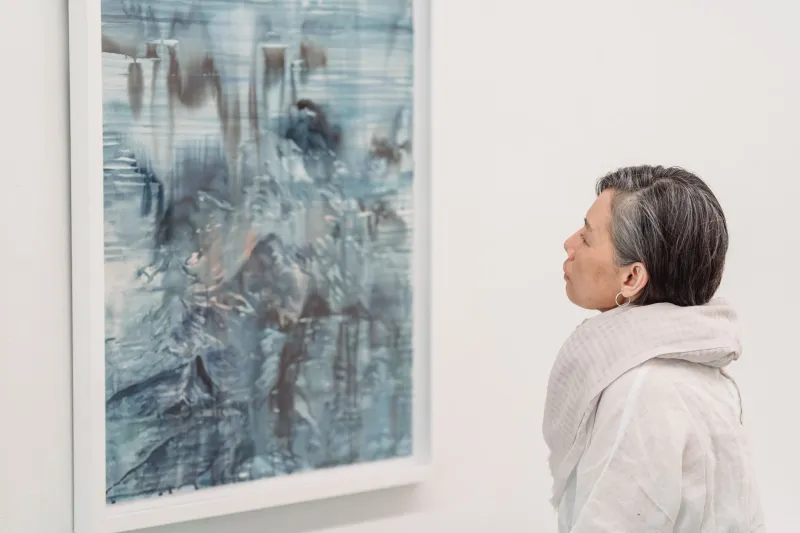
This is a failure of curatorial thinking. A host who has spent days sourcing ingredients, hours arranging flowers, and considerable resources acquiring the art that hangs above the sideboard cannot afford to surrender the sonic dimension of the gathering to chance or convenience. The room has a voice. The question is whether that voice has been given anything intelligent to say.
The hosts who have addressed this question most seriously tend to share a common characteristic: they have built a music collection the way they have built their art collection—slowly, deliberately, with attention to quality, provenance, and the specific emotional register they wish to create.
Vinyl as a Collecting Discipline
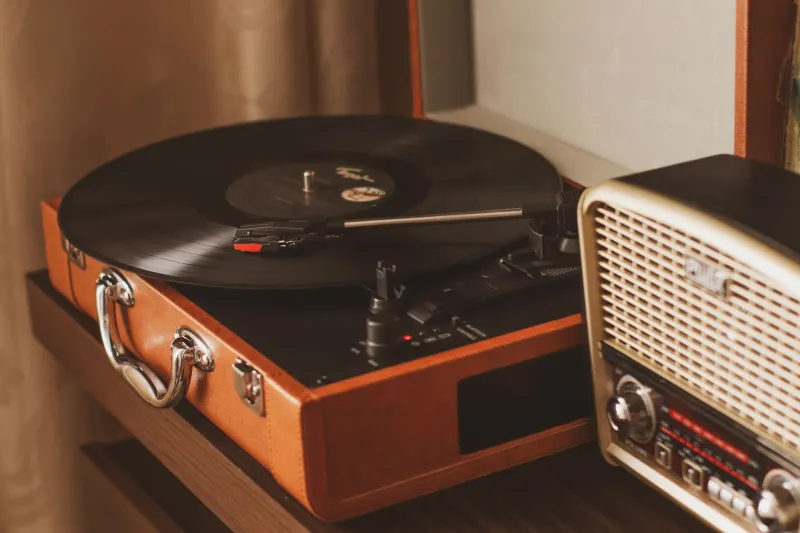
The resurgence of vinyl record collecting in the United States over the past decade has been well documented, but among the most design-forward segment of that community, the motivation goes considerably beyond nostalgia. For these collectors, a curated vinyl library is a genuine extension of their aesthetic identity—a collection of objects, each with its own visual and sonic character, that together constitute a statement about how they wish to live and entertain.
The physical act of selecting and playing a record communicates something to guests that no streaming service can replicate: it signals that the music has been chosen. Someone made a decision. The ritual of removing a record from its sleeve, placing it on the turntable, and lowering the needle is, in its own quiet way, a gesture of hospitality—an acknowledgment that the sonic environment of the gathering has been attended to with the same care as the meal itself.
Collectors in this space speak of building their libraries with specific entertaining contexts in mind. There are records for the aperitivo hour—lighter, more conversational, inviting rather than commanding attention. There are records for the table itself, where the music must sustain a mood without overwhelming conversation. There are records for the hours after dinner, when the gathering shifts register and the music can become more present, more personal.
The Art of the Playlist
For those whose primary medium is digital, the playlist represents a parallel discipline—and one that rewards the same curatorial intelligence as any other collecting practice. A genuinely considered playlist is not a shuffle of favorites. It is a composed sequence with an arc: a beginning that establishes a mood without asserting it too forcefully, a middle that sustains and develops, an ending that brings the evening to a satisfying resolution.
The most accomplished hosts in this regard think in terms of key and tempo as much as genre and era. They understand that abrupt shifts in energy—a sudden jump from low-tempo jazz to uptempo funk, for instance—create a kind of sonic dissonance that guests register even when they cannot articulate it. They attend to the emotional temperature of each transition, ensuring that the movement from one piece to the next feels considered rather than accidental.
Some of the most thoughtful practitioners of this discipline draw direct parallels to visual art curation. Just as a well-hung gallery wall requires attention to the relationship between individual works—their scale, their color, their emotional register—a well-composed playlist requires attention to how each selection relates to what precedes and follows it. The individual pieces matter. The sequence matters more.
Sonic Identity and the Home
Beyond the specific context of entertaining, the most sophisticated collectors are beginning to think about what might be called the sonic identity of their homes—a consistent aesthetic character in the music that fills their domestic spaces, one that exists in deliberate relationship with the visual and material identity they have cultivated through art, furniture, and objects.
A home filled with mid-century American studio ceramics and abstract expressionist prints has a different sonic identity than one anchored in antique European furnishings and Old Master drawings. This is not a prescriptive formula. It is an invitation to consider whether the music that fills your home is in genuine conversation with everything else you have chosen to live among—or whether it is simply filling silence.
The most intentional hosts have understood something that the broader entertaining culture is only beginning to catch up with: a gathering is a total work. Its success depends on the coherence of all its elements—visual, culinary, tactile, and sonic. To attend to three of those four with great care and abandon the fourth to chance is to leave the work unfinished.
The table has been set. The collection has been considered. It is time to attend, at last, to what the room sounds like.